
Things that age well
Why patina feels better than perfection.
One thing I miss about living in Europe is how easy it was to find solid, old furniture.
Even in the small country town where I grew up, there was a flea market filled with heavy timber tables, worn oak cabinets and brass handles darkened by decades of touch. These pieces had already lived somewhere before they came to you.
Here in rural Australia, that is harder.
Australia is younger in terms of European settlement, and that shows in what circulates second-hand. There are fewer layers of inherited objects, fewer cupboards tucked away waiting to be rediscovered. When you go searching for something old and solid, the options feel limited.
Perhaps that is why I notice so sharply how different much of our new furniture feels.
There comes a moment when something new stops being precious. The first scratch on timber flooring, the slight darkening of a brass handle, the crease in leather once it has been properly used. At first it can feel like damage, but often it is simply the beginning of character.
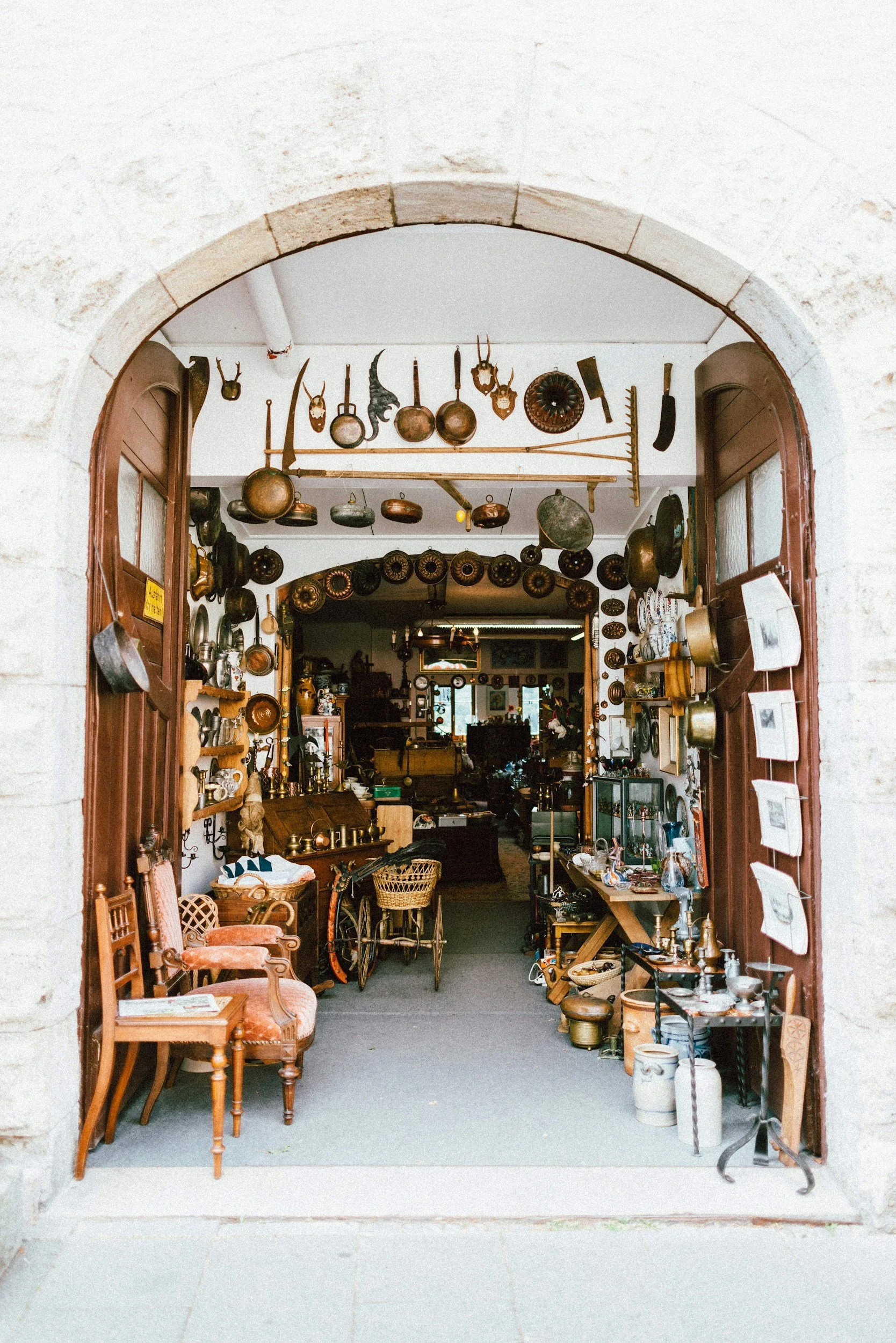
My happy place.
When wear becomes warmth
The difference between ageing and deteriorating. Not all marks are equal.
There is a quiet difference between materials that age and materials that simply break down. Timber deepens over time. Brass dulls and grows richer. Linen softens with washing. Real stone pavers at the front door slowly reveal the rhythm of daily life, faint paths forming where people walk in and out.
These changes are what give a home its sense of history.
Veneer lifting, laminate chipping or coatings flaking off tell a different story. They do not feel romantic. They feel tired.
The issue is not wear itself, but quality. Good materials absorb life and respond to it. Poor ones show their limits quickly.
It is the same with something as simple as shoes. I only buy leather shoes. They are not inexpensive, but they mould to my feet and the soles can be replaced. The leather creases in a way that feels personal. I have pairs that have lasted years.
Synthetic versions may cost less at the beginning, yet they often crack, lose shape and cannot be repaired. They are simply replaced.
Ageing is not about accepting damage. It is about choosing things that can carry time.
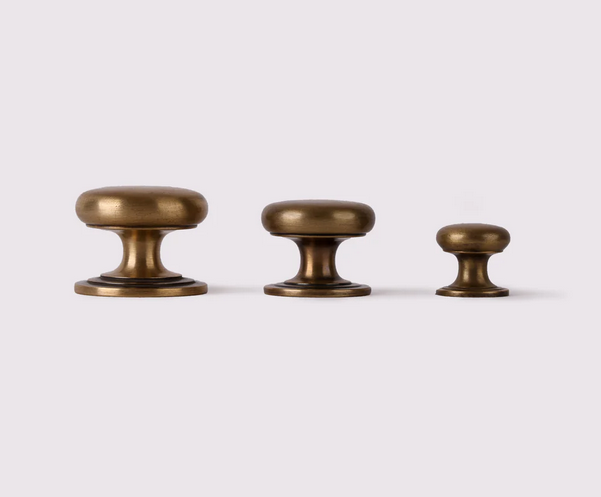
Solid brass cabinet knobs are absolutely affordable and they only get nicer with time.
The look of time
Why we are drawn to imperfect surfaces.
There is a strong movement towards texture and softness. Zellige tiles with uneven glaze. Taps that arrive looking already worn-in. Porcelain that imitates sandstone or travertine. Limewashed walls that catch the light more gently.
It is easy to dismiss this as trend-driven, but it reveals something deeper. We are tired of gloss and sterile perfection. We are craving warmth and variation.
Many of these finishes imitate the effect of time rather than respond to it. A brushed brass tap may be PVD-coated to hold its colour. Handmade-look tiles can be produced in factories. Sandstone-look porcelain will not weather like real stone; it will remain exactly as it is.
There is nothing wrong with choosing these materials. They can be practical and beautiful.
It is simply helpful to understand whether a finish is designed to change with you over time, or to stay exactly the same. Both approaches have their place.
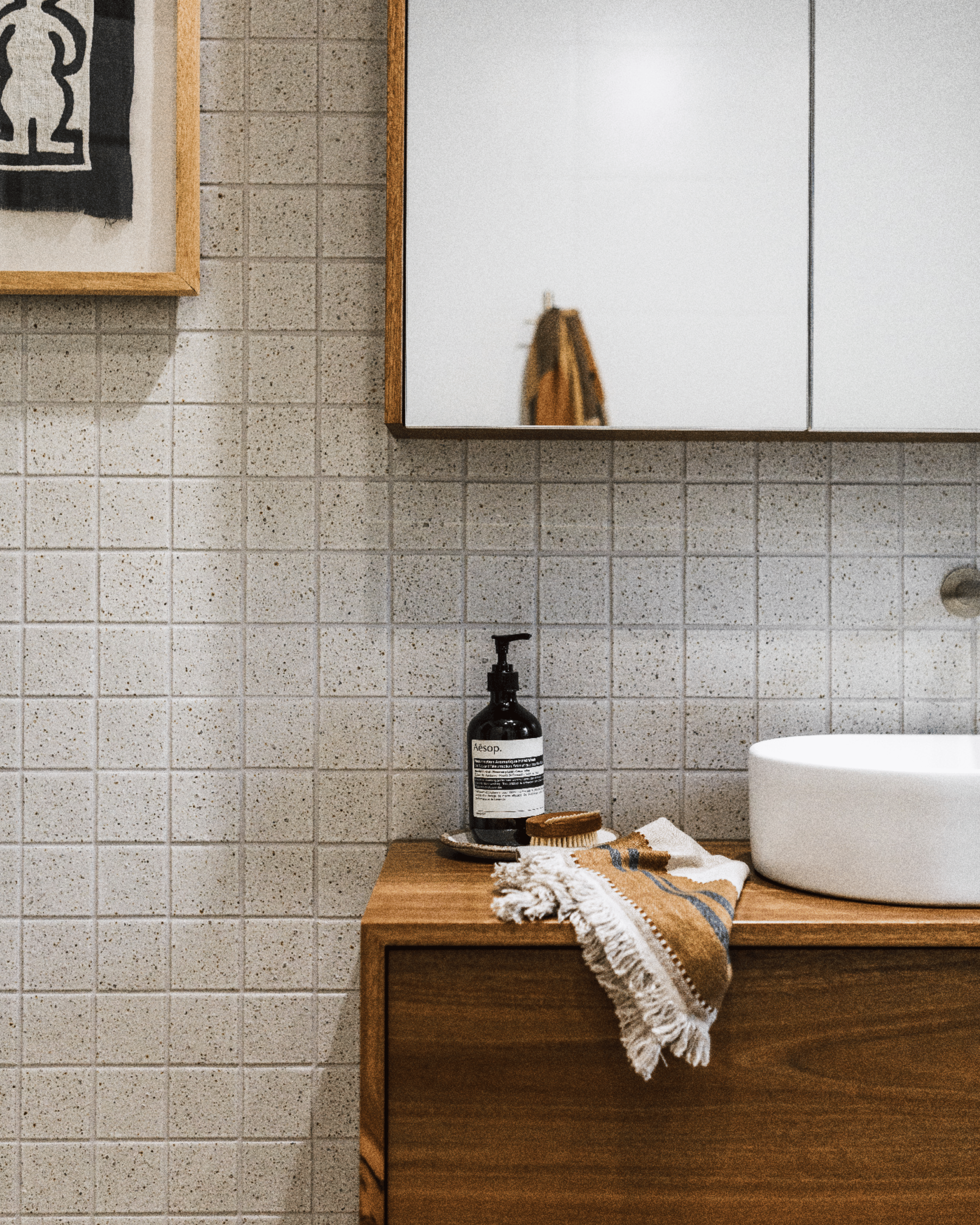
These imperfectly perfect handmade Japanese tiles bring so much warmth into this bathroom.
Choosing what endures
Investing in pieces that stay with you.
Loving patina does not mean filling your home with antiques. It means being deliberate about what you bring into it.
I was recently looking for a new bed and found myself frustrated by how difficult it was to find something solid and well made. Plantation timber with a harsh yellow glow. Veneers that will lift. Small pieces of wood glued together instead of proper boards. Pieces that may look acceptable at first but struggle after a few years of real life.
Some materials do not age. They deteriorate.
When that happens, they are rarely repaired.
There is a metal chandelier hanging above our dining table that my parents sent to me from Germany many years ago. It is not an antique and certainly not worth a fortune, but I adore it.
Since arriving in Australia, it has come with me from house to house. In a country where light fittings are usually sold with the home, this one has always been excluded from the sale.
A little paint has worn away and some of the brass finish is no longer perfect. But that hardly matters. It is solid, sturdy and still doing exactly what it was made to do.
Perhaps that is the thing about well-made objects. They stay around long enough to become part of your life.
Paying more for quality does not mean protecting things from life. It means choosing pieces that can withstand it.
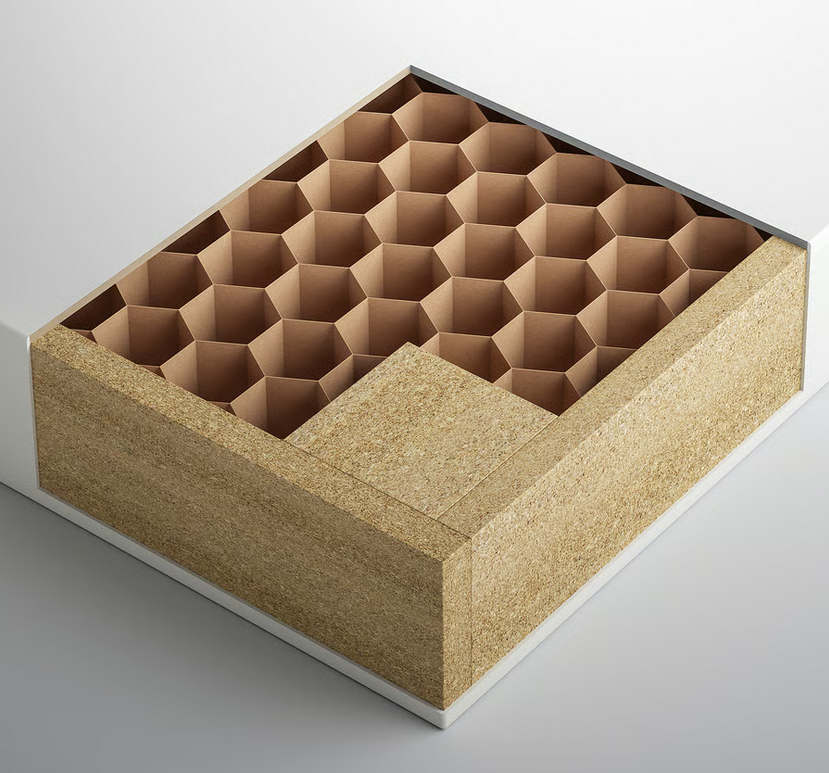
Some furniture is for now. Some is for decades.
The bones of a home
Where durability matters most.
This thinking becomes even more important when it comes to the foundations of a house.
Laminate and hybrid flooring may look convincing at first, but once scratched or swollen, that is the end of them. A hardwood floor can be sanded and revived. Wear marks become part of its story rather than the reason it is removed.
Kitchens follow the same logic. Solid timber cabinetry is beautiful and repairable, but not everyone can justify the cost. The real question becomes durability. What will still feel good in ten years? What can be refreshed rather than replaced?
Living in the subtropics adds another layer.
Seasonal rain brings moisture and mould. Leather can struggle. Windows are thrown open and wind moves through the house.
We do not live in Europe.
We live with harsh sun, humidity and air that moves through rooms. That exposure is part of the beauty of living here.
Designing with this climate in mind means choosing materials that can handle light, movement and moisture. Surfaces will weather. That is not failure. It is honesty.
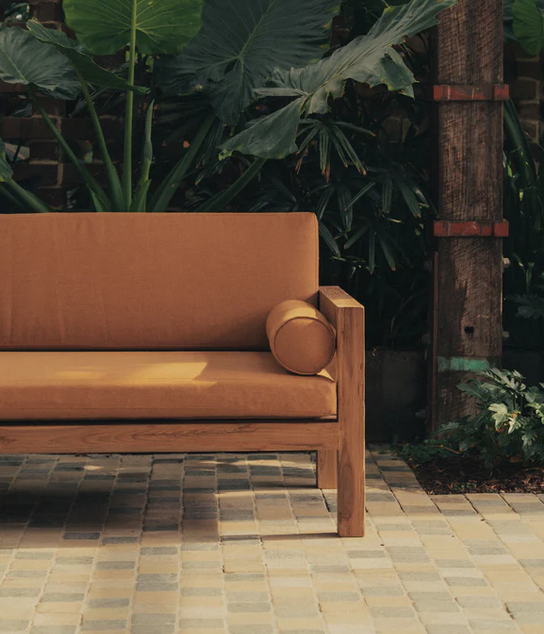
Quality teak outdoor furniture can last the test of time if properly cared for.
Where to invest, where to adapt
Making thoughtful choices on a real budget.
Designing for time does not require wealth. It requires priority.
A child's bedroom will evolve as quickly as they do. Beds change size. Interests shift. That is rarely where I would invest heavily.
A sofa in a house with young children will live a demanding life. Choosing something practical and comfortable makes sense.
A solid hardwood dining table, however, is different.
It will gather scratches from homework and Lego, but those marks will feel earned. In twenty years they will read as memory rather than damage.
Invest where the material can handle time and where the piece anchors daily life. Spend on structure where possible and allow the rest to evolve.
Textiles, art and lighting can shift with seasons and trends. The bones should not need replacing every few years.
Longevity is not about filling a home with expensive things. It is about choosing a few pieces that are built to stay.
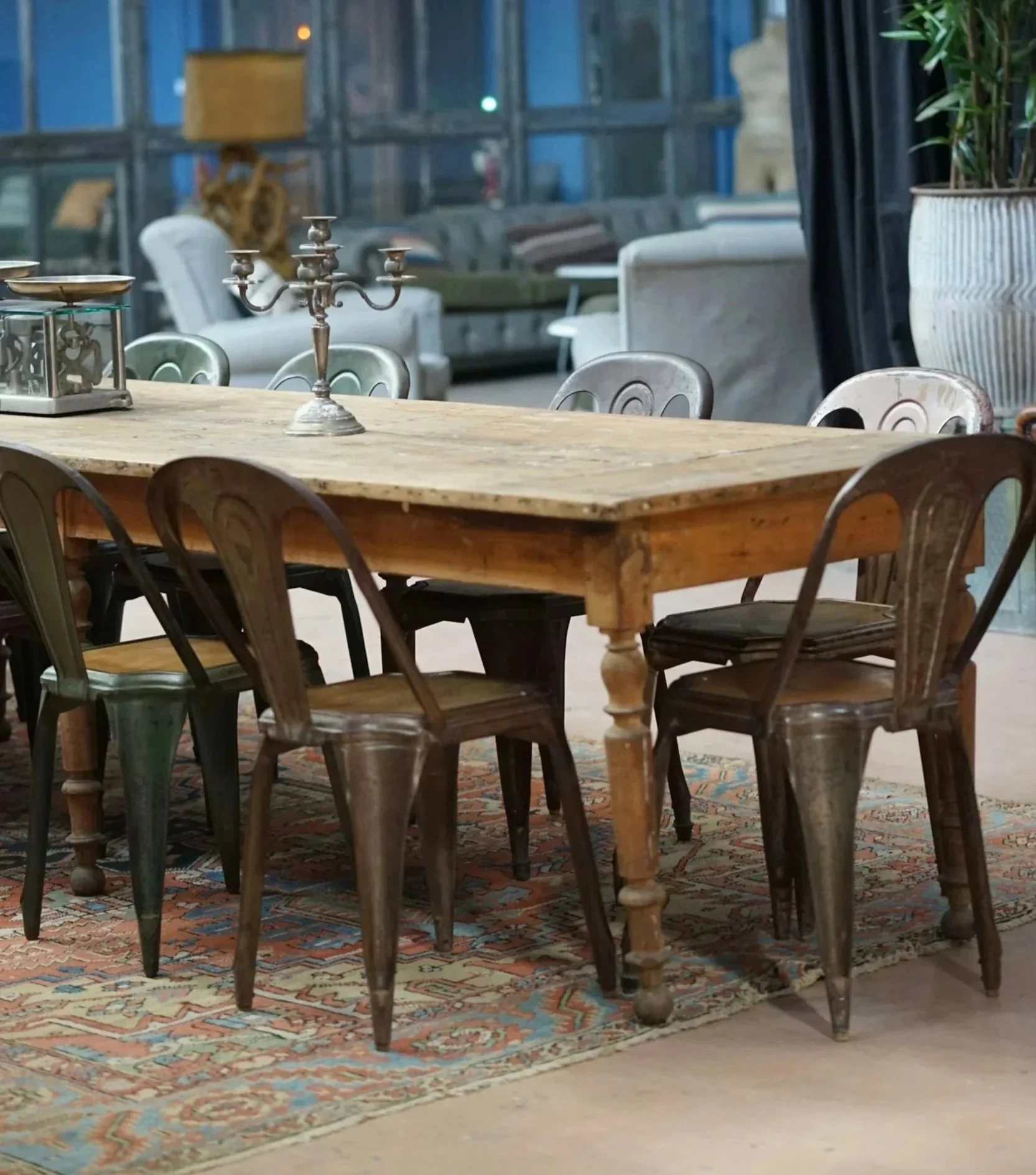
A dining table made from real timber is so worth the investment.
There is something deeply comforting about a home that does not fight time.
Floors that carry traces of movement. Handles darkened by use. Linen softened by washing.
Perfection is static.
Patina tells you that life has happened here.
And a home that ages well does not feel tired.
It feels more like itself.
Until next time.
Vera x