
Before you rip it out
How to decide what’s worth keeping when renovating.
There’s a moment in almost every renovation where doubt creeps in. You start noticing the odd bits. The pole in the wrong place. The wall that interrupts your plan. The dated detail you can’t unsee once it’s pointed out. And suddenly the instinct is to remove, replace, start fresh.
Sometimes that instinct is right. Often, it’s worth slowing down.
Many Australian homes, especially those built from the 60s through to the 90s, are full of practical decisions made quickly and affordably at the time. Brick veneer, masonite ceilings, structural posts placed where they made sense, not where they looked best. Not every awkward detail is a mistake. Some are simply part of the framework you’re working within.
Before jumping to change, it helps to pause. What is this element actually doing? Is it structural, functional, or mostly visual? And if it were removed, what would that really cost, not just financially, but in terms of disruption and flow?
That pause alone can change the direction of a renovation.
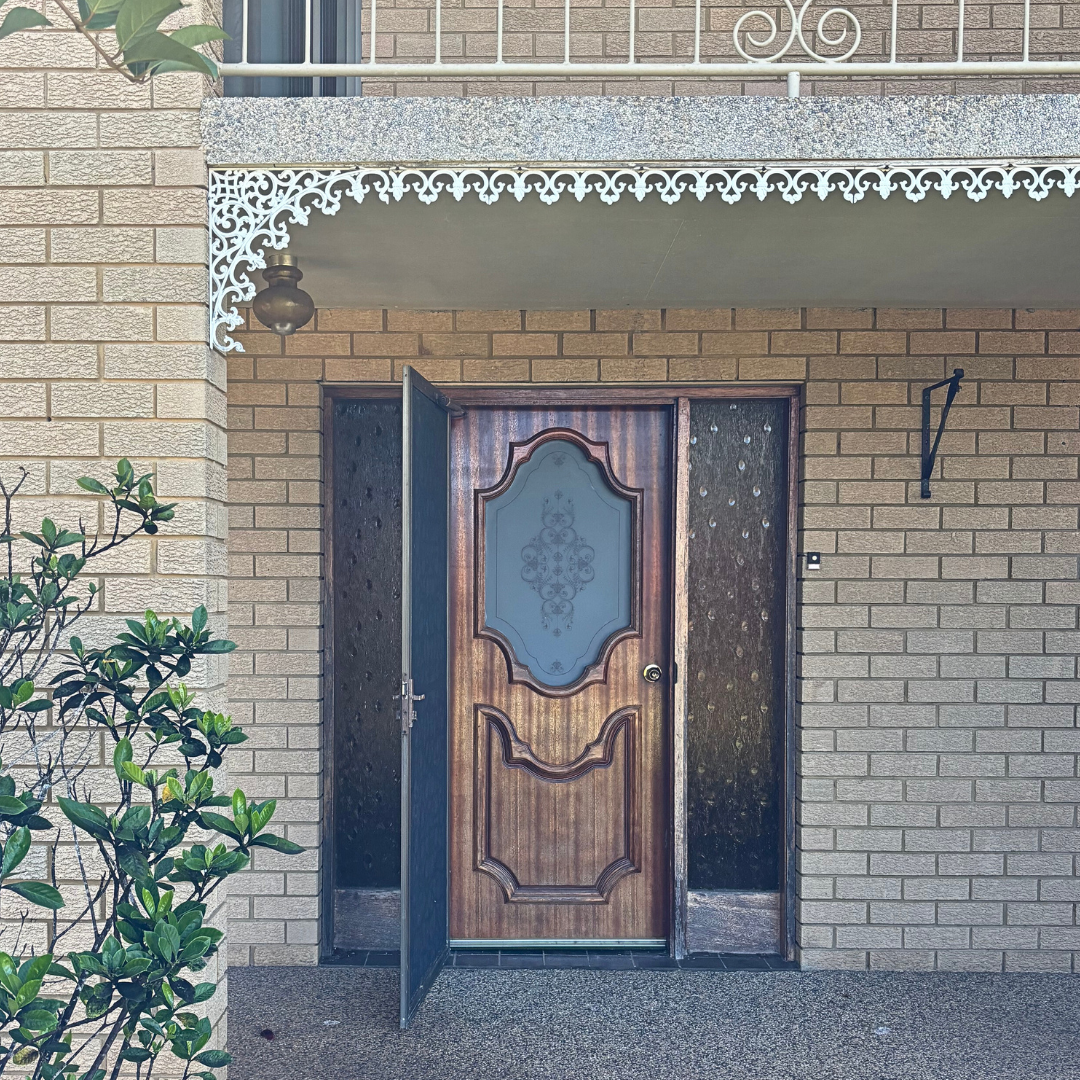
Lacework… sorry, but that will have to go.
The difference between original and just old
Not everything deserves saving, and that’s okay.
There’s a difference between something that has aged with integrity and something that was never particularly good to begin with. Cheap additions, fake finishes and awkward fixes layered on over time often don’t earn their place.
Decorative metal lacework on many 70s and 80s Australian houses is a good example. Added to “prettify” a façade, it rarely relates to the structure itself. Once removed, the house underneath often feels calmer and clearer, as if it can finally stand on its own.
By contrast, solid materials usually respond well to care. Hardwood doors that look tired or heavy can often be stripped back, sanded and oiled, or repainted properly. What once felt dated becomes grounding. Replacing these elements with something lightweight and generic often costs more and adds less.
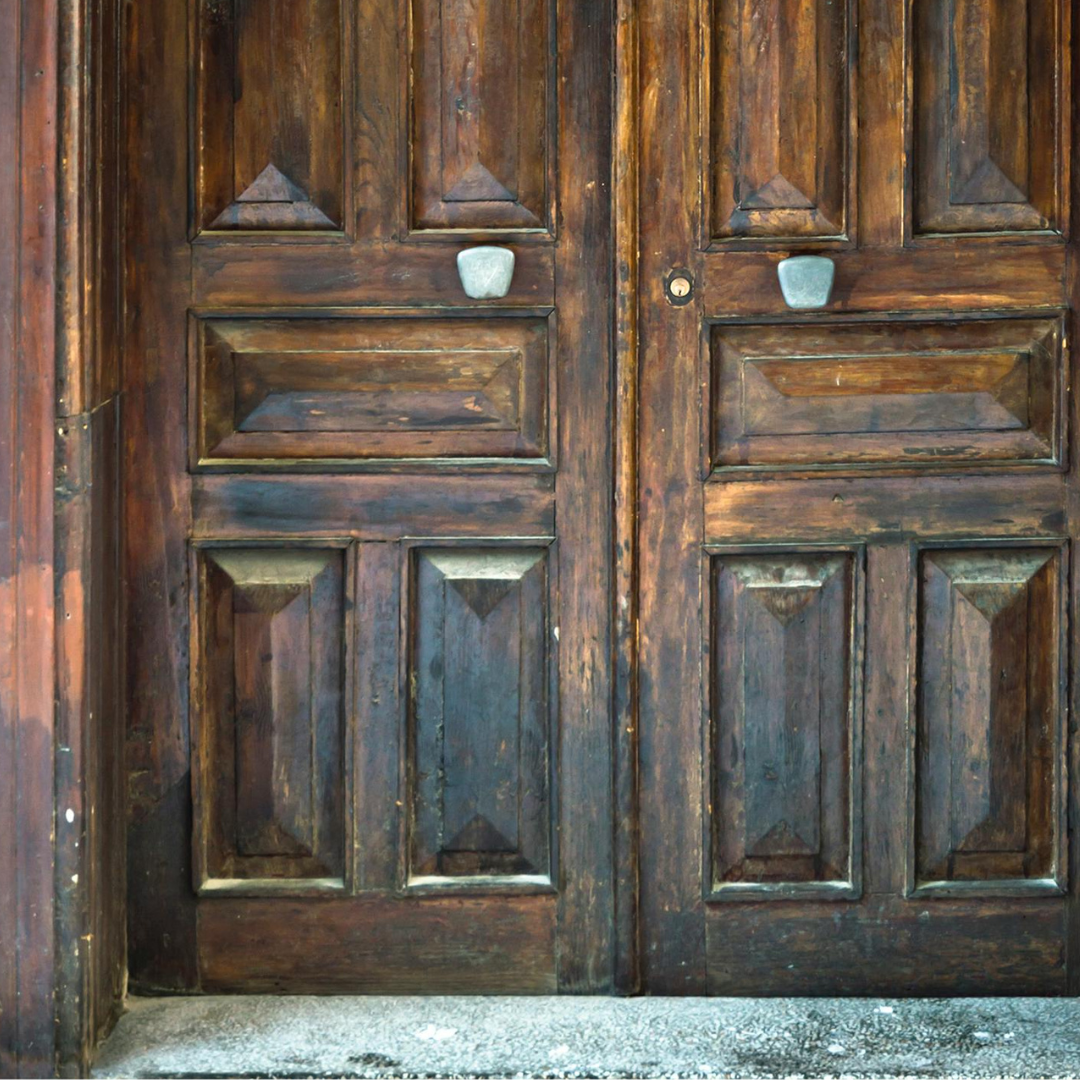
Old wooden doors can easily be rejuvenated.
When keeping something is the smarter move
Working with what’s there can lead to better outcomes.
In my own entrance there’s a structural pole that, ideally, would sit somewhere else. Moving it was possible, but expensive and completely out of proportion to what it would add.
Instead of fighting it, we removed what didn’t belong. The fake cladding came off. The pole stayed. Wrapped in sisal rope, it shifted from being something you notice for the wrong reasons to something that anchors the space. It now feels intentional rather than apologetic.
Columns, beams and nib walls come up all the time in Australian homes, especially those designed around roof structure rather than open-plan living. Working with them instead of against them often leads to more believable, settled spaces.
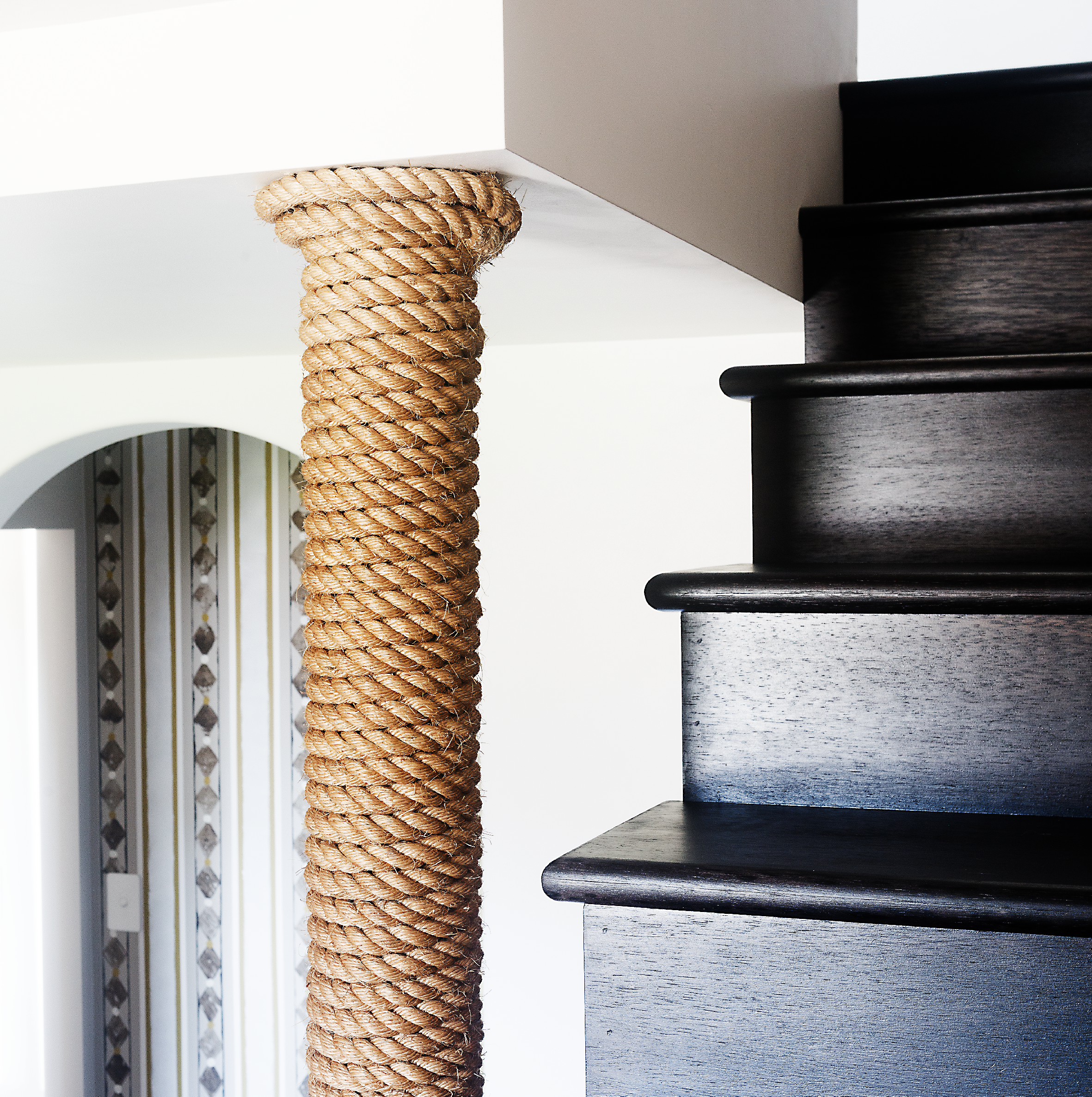
Sisal rope nicely covering a structural pole.
When change is worth the cost
Some decisions really do improve daily life.
Of course, not everything should stay. Some changes are genuinely transformative and worth investing in.
In the same house as the entrance pole, we moved the front door. It changed how you arrive, how light enters, and how the house is read from the street. It also meant rendering the brick exterior. It wasn’t small or cheap, but the payoff was long-term. The house finally made sense.
The same applies inside. Sometimes rooms are too tight or too chopped up to work well. Combining them can create breathing space. Two small rooms become one generous, light-filled area where movement is easier and daily life flows.
And sometimes the issue isn’t space, but finish. Masonite ceilings are a classic example in Australian homes. You can repaint them again and again, but the joints keep coming back. In those cases, replacing the ceiling is an investment worth making. It cleans everything up and gives the room a calm backdrop that stops drawing attention for the wrong reasons.
When a change improves how you live every day, not just how a room looks, it’s often worth it.
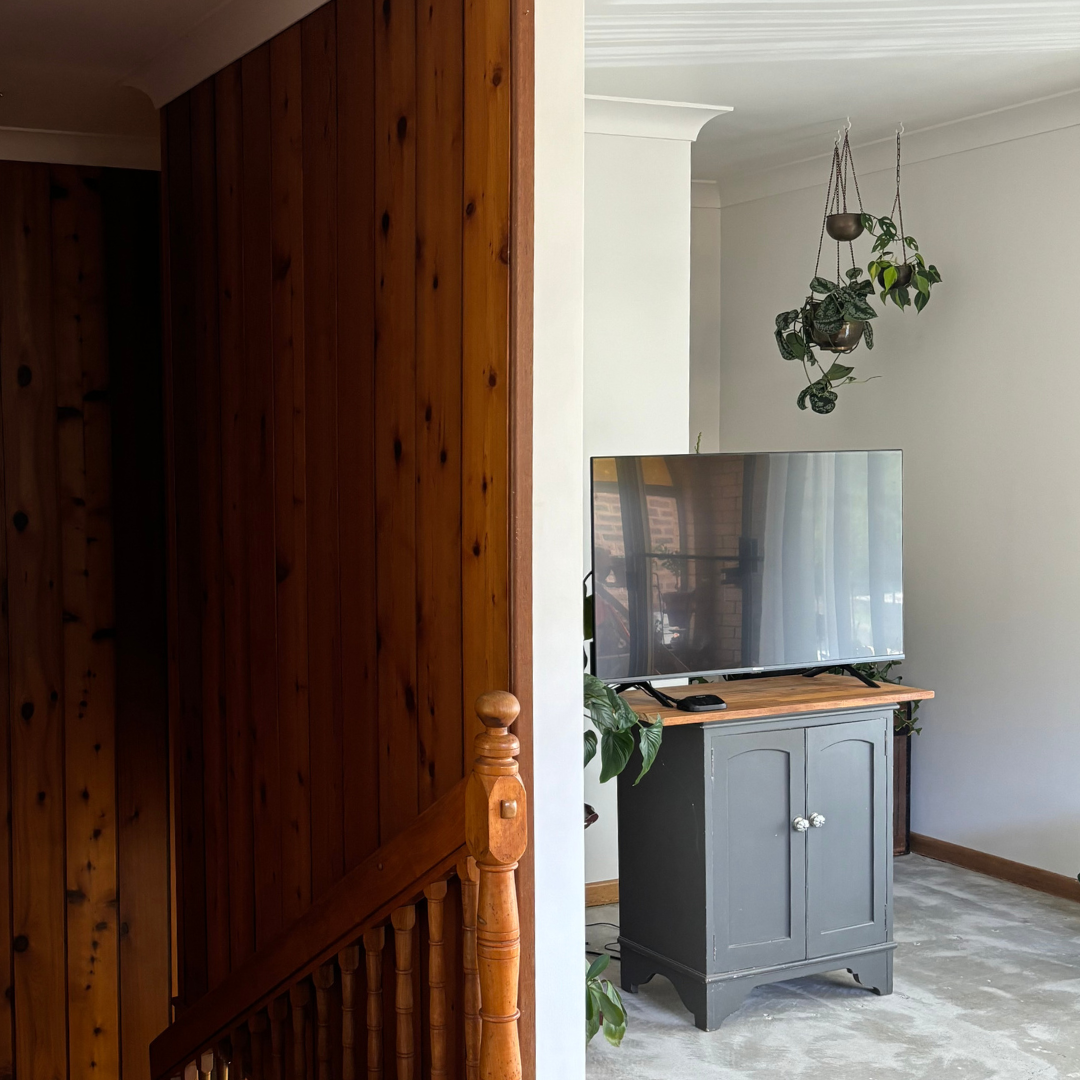
Changing the stairs to create a bigger living area was a definite must in this reno.
Add, don’t always subtract
Improvement doesn’t always mean removal.
Once the big decisions are understood, it’s worth looking at what can be improved without pulling everything apart.
Renovations are often approached as exercises in removal, but many spaces improve through addition instead. A flat or dated façade doesn’t always need a rebuild. Rendering brick veneer can unify surfaces. Timber cladding can soften proportions and add warmth. Even a thoughtful paint change can bring everything back into balance and make the original structure feel intentional again.
Inside, the same logic applies. Existing floors may only need sanding and a different finish. Walls that feel lifeless can gain depth through panelling, layered paint or limewash. Built-in joinery can solve storage issues without changing the footprint, and lighting can completely alter how a room is experienced.
Often, it’s these quieter additions that do the heavy lifting, improving how a space feels day to day without the cost, waste or disruption of pulling everything apart.
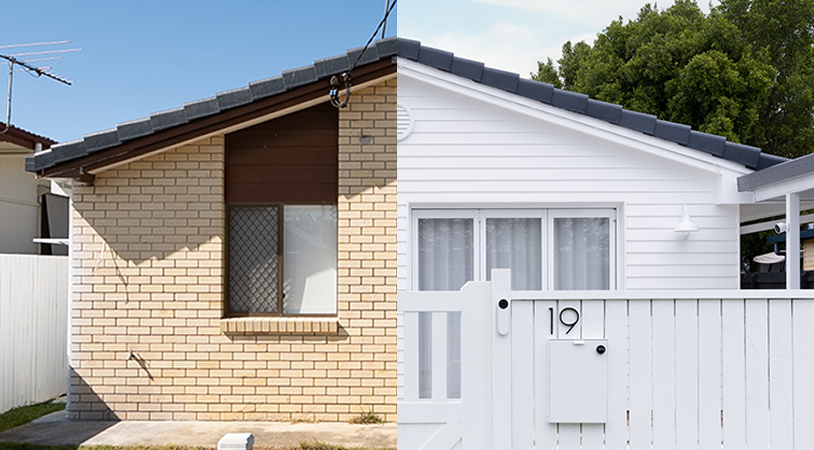
Hardie cladding is just one of many options.
Start with a plan, not a mood board
Clarity beats inspiration every time.
Good decisions rarely come from scrolling. They come from clarity.
Before renovating, it’s worth writing things down. What you need. What you like. What you dislike. What absolutely has to work, and what would be nice but not essential. Ordering these by importance helps guide decisions when trends or opinions start pulling in different directions.
A house needs to work for its owners. What suits one person perfectly may be wrong for another. This kind of plan helps you spend money where it will make the biggest difference to daily life.
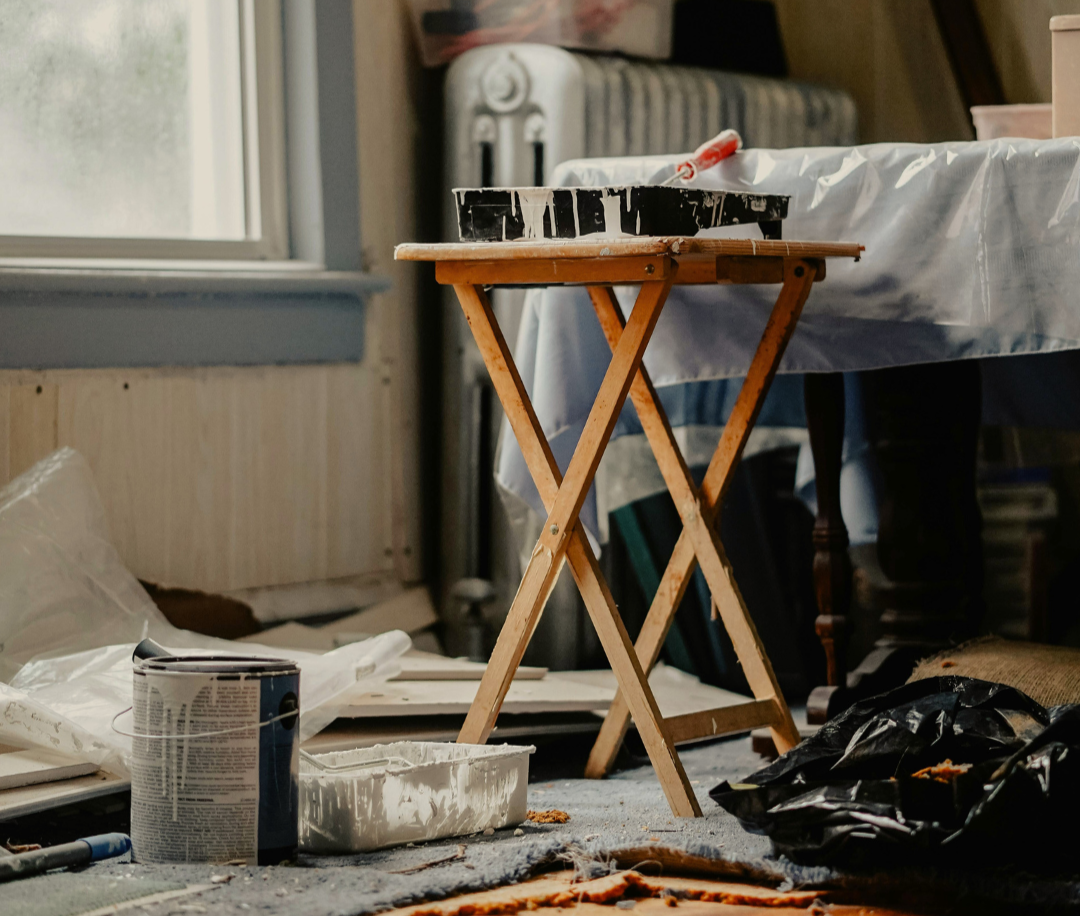
Clarify your needs before you start.
Live with it first, if you can
Time is often the best design tool.
Not every decision needs to be made at once. If a space is functional and safe, there’s real value in living with it for a while before committing to major changes.
Spending time in a house reveals things drawings and mood boards can’t. How the light moves through the rooms. Where you naturally gather. What actually annoys you day to day, and what fades into the background once life settles in.
This approach is especially useful when renovations need to happen in stages or budgets are tight. Often, the most confident renovations aren’t rushed. They’re shaped by time, use and understanding.
Whether you’re renovating slowly or tackling things in stages, the same principle applies. Slow down. Look properly. Make decisions with intention rather than panic. Keeping something awkward, changing something important, or choosing not to renovate at all can all be good decisions when they’re part of a clear plan. The homes that feel most resolved are rarely the ones where everything was replaced. They’re the ones where someone took the time to decide what really mattered.
Until next time.
Vera x